Pakistanis Paid Over Rs. 700 Billion in Electricity Bill Taxes: What It Really Means
Most people in Pakistan look at their electricity bill, feel the shock, and pay it without question. But very few understand what actually makes up the total amount.
A significant portion of your electricity bill is not electricity consumption at all. It is taxation and government levies collected automatically at source.
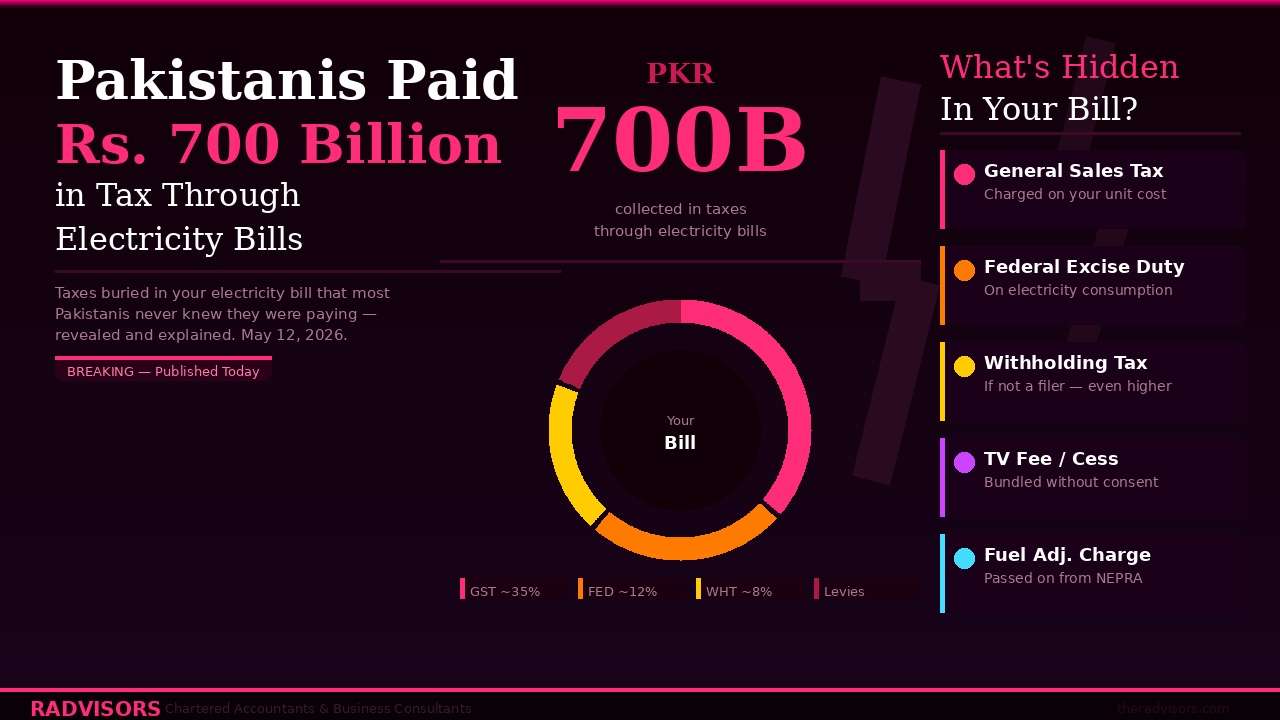
Recent figures show that Pakistanis have paid over Rs. 700 billion in taxes through electricity bills. This is not a small number. It reflects how electricity billing has become one of the largest indirect tax collection mechanisms in the country.
What Is Inside Your Electricity Bill?
Your electricity bill is not a single charge. It is a combination of multiple components, including electricity cost, government taxes, and regulatory surcharges.
1. General Sales Tax (GST)
GST is applied on electricity consumption based on usage slabs and consumer category (domestic, commercial, or industrial).
- Higher consumption = higher tax impact
- Commercial and industrial users bear a heavier burden
- GST is applied on the total billed amount, increasing overall cost
2. Federal Excise Duty (FED)
Federal Excise Duty is an additional tax applied mainly on commercial electricity consumers.
This is charged over and above GST and directly increases the final bill.
3. Withholding Tax
Withholding tax is one of the most important components for individuals and businesses.
- Non-filers pay higher withholding tax rates
- Active Taxpayer List (ATL) filers pay reduced rates
- This creates a strong financial incentive to remain a filer
👉 Simply put: your tax filing status directly affects your electricity bill.
4. Additional Government Levies
Apart from major taxes, your bill may also include:
- TV License Fee (bundled automatically)
- Neelum-Jhelum Surcharge
- Financial Cost Surcharge
- Fuel Price Adjustment (FPA)
These are not optional and are added automatically.
Why the Rs. 700 Billion Figure Is So High
The Rs. 700 billion tax collection through electricity bills is not accidental. It is the result of two major factors:
1. Rising Electricity Prices
Electricity tariffs in Pakistan have increased significantly in recent years due to:
- IMF-driven tariff reforms
- Fuel cost pass-through adjustments
- Currency depreciation impacting imported fuel costs
When electricity prices rise, tax collection also increases automatically because most taxes are based on percentage.
2. Efficient Tax Collection System
Electricity billing is one of the most efficient tax collection tools in Pakistan because:
- Payments are unavoidable
- Disconnection risk ensures compliance
- Taxes are embedded directly in monthly bills
This makes electricity bills a highly reliable tax recovery channel for the government.
IMF Influence on Electricity Taxes
Pakistan’s electricity pricing and taxation structure is also linked to IMF-supported fiscal reforms.
Key factors include:
- Petroleum and energy levies aligned with fiscal targets
- Revenue collection through indirect taxation
- Reduction of untaxed consumption channels
As a result, embedded taxation in electricity bills is part of a broader fiscal strategy—not a temporary measure.
Impact on Businesses in Pakistan
For businesses, electricity bills are not just a utility expense. They are a tax-sensitive cost structure.
1. Input Tax Credit Opportunity
Businesses registered for GST may be able to:
- Claim GST paid on electricity
- Offset it against output tax liability
- Reduce overall tax burden
However, this benefit is often missed due to poor accounting systems.
2. Common Compliance Gap
Many businesses in Pakistan:
- Do not properly record electricity GST
- Fail to claim input adjustments
- Overpay taxes unintentionally
This results in avoidable financial leakage.
The Filer Advantage
Being on the Active Taxpayer List (ATL) provides meaningful benefits beyond income tax.
Key advantages include:
- Lower withholding tax on electricity bills
- Reduced banking transaction taxes
- Lower property transaction taxes
- Overall reduced indirect tax burden
The cumulative impact across a year can be substantial.
Conclusion
The Rs. 700 billion collected through electricity bills highlights a major reality:
👉 Electricity billing in Pakistan is not just a utility payment system
👉 It is also a powerful and structured tax collection mechanism
For consumers, this means higher monthly costs.
For businesses, it creates both challenges and opportunities in tax planning.
Proper tax filing status and accurate accounting can significantly reduce the effective burden.
Author Note
Prepared by a qualified Chartered Accountant with Big 4 and banking sector experience. Information compiled from NEPRA tariff structures, FBR withholding tax schedules, and public financial reporting sources (updated May 2026).

Recent Posts

Best Bank Stocks in Pakistan 2026

Section 7E Struck Down by Court: What Every Property Owner in Pakistan Must Know