
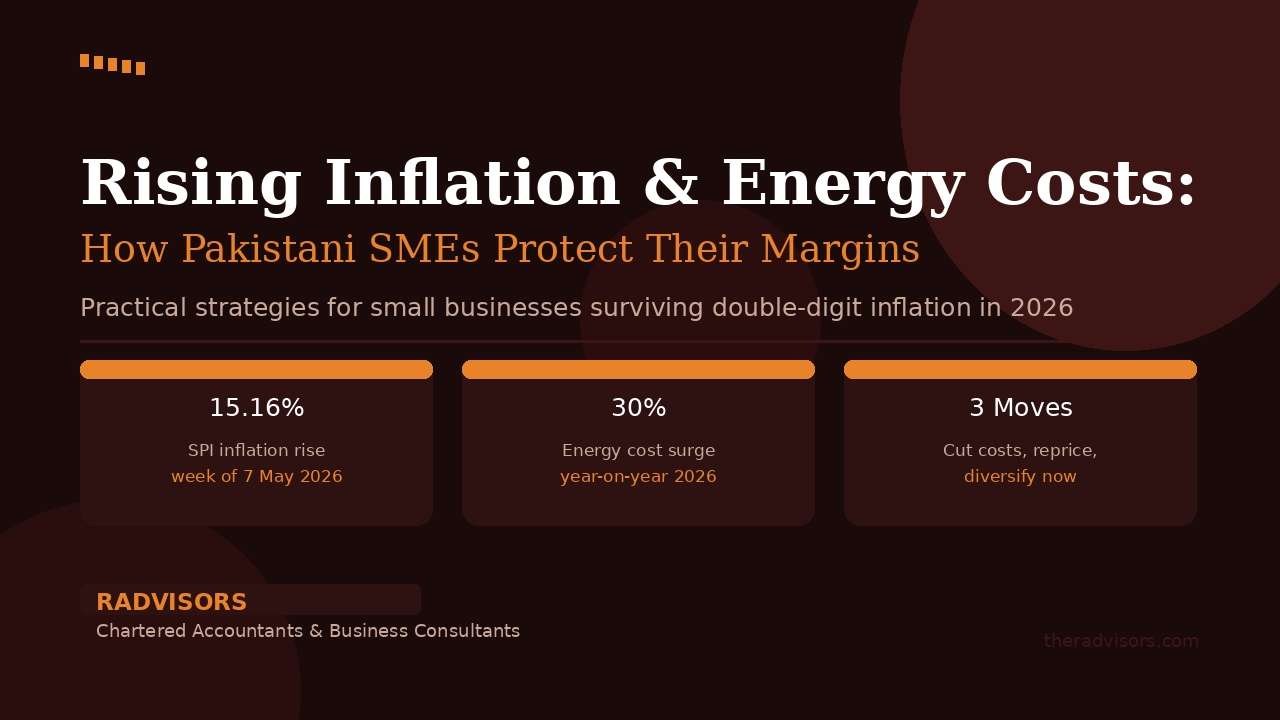
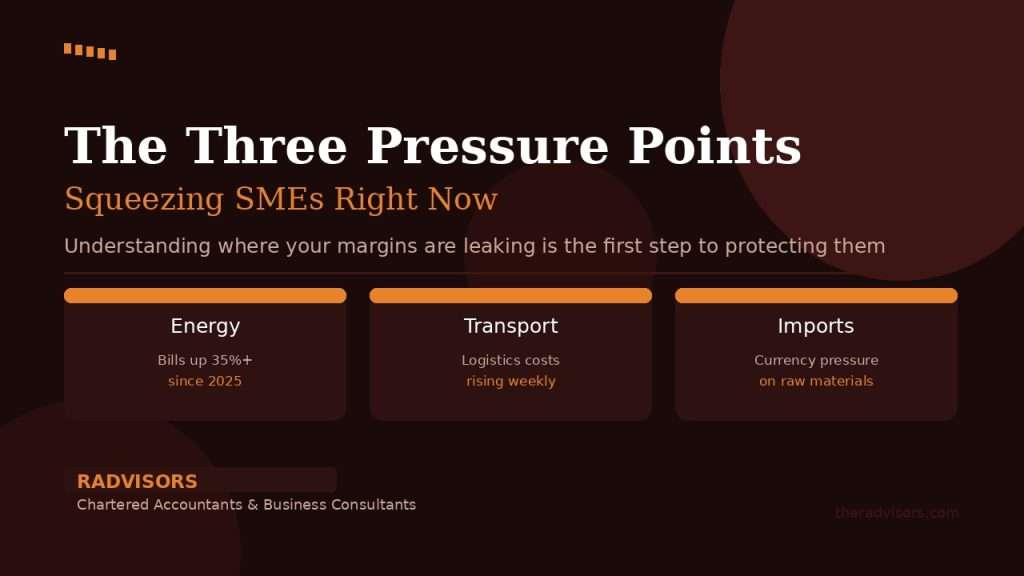
Pakistan’s small businesses are being squeezed from every direction at once. Weekly inflation jumped 15.16 percent year-on-year in the first week of May 2026. Energy costs have risen close to 30 percent annually. Transport costs are climbing weekly. And the Middle East conflict has added fresh pressure on oil prices, raw material imports, and currency stability.
For an SME owner, this is not an abstract economic problem. It arrives as a monthly electricity bill that has doubled, a supplier who just raised prices, and a customer who still expects last year’s rate.
The businesses that survive this period are not necessarily the strongest. They are the most financially aware. Here is what that looks like in practice.
Know Your Numbers Before Anything Else
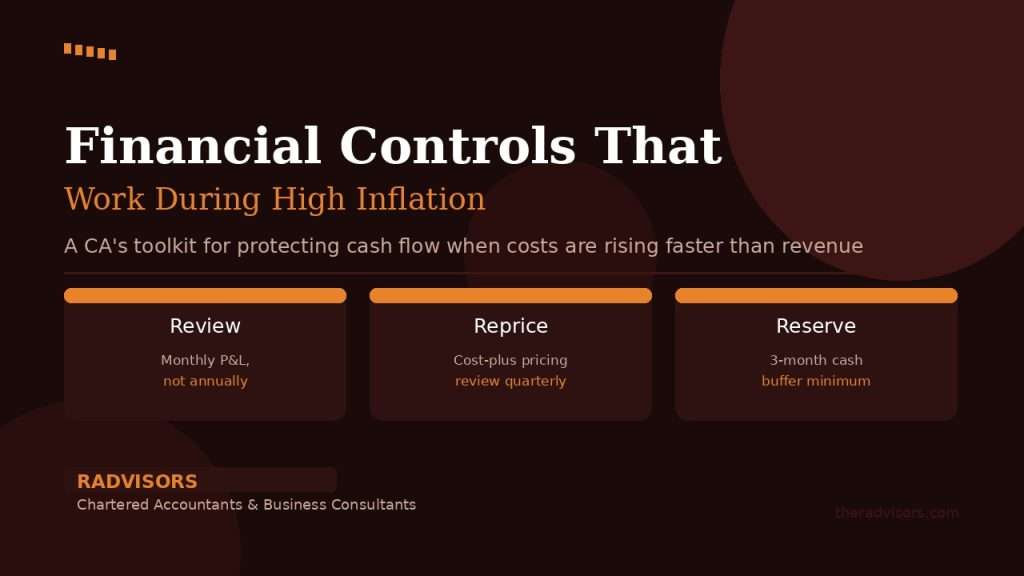
You cannot protect a margin you have not measured. Monthly profit and loss review is no longer optional, it is survival. If you are still reviewing financials annually, you are already behind. Inflation moves faster than annual cycles. Identifying which cost lines are growing, which products or services are still profitable, and where cash is leaking requires monthly visibility at minimum.
Control What You Can
Energy is now your most manageable major cost. Industrial solar installations in Pakistan are paying back within two to four years and generating effectively free electricity beyond that. The federal government offers 90 percent accelerated depreciation on solar equipment in the first year, a significant tax benefit that most SME owners are unaware of. State Bank green financing is available at subsidised rates. This is a one-time investment that permanently removes your largest variable cost.
Reprice Before It Is Too Late
Cost-plus pricing reviewed annually made sense when inflation was predictable. It does not work when energy and input costs are rising monthly. Build a quarterly pricing review into your business rhythm. Communicate changes to customers professionally and early, most understand the environment. The ones who do not were never your most profitable clients anyway.
Build a Cash Buffer
Three months of operating expenses held as accessible cash is not excessive caution in the current environment. It is the difference between a difficult quarter and a business closure. Tight cash flow is the single most common reason viable Pakistani businesses fail during inflationary periods, not weak demand, not poor products, but an inability to bridge a temporary gap.
The SMEs that emerge from 2026 in a strong position will be the ones that treated financial discipline as a competitive advantage rather than an administrative burden. The numbers are not the enemy. Ignoring them is.
Reviewed and Written By
Prepared by Radvisors & Co a qualified Chartered Accountant with Big 4 and diversified industry experience. All economic data sourced from Pakistan Bureau of Statistics and Dawn Business, current as of May 2026.
RAdvisors provides financial advisory, bookkeeping, and tax services for Pakistani SMEs. Contact us here (https://theradvisors.com) for a free initial consultation.



Good suggestions.
Thanks