How the US–Iran War Is Affecting Businesses and Investors in Pakistan — May 2026
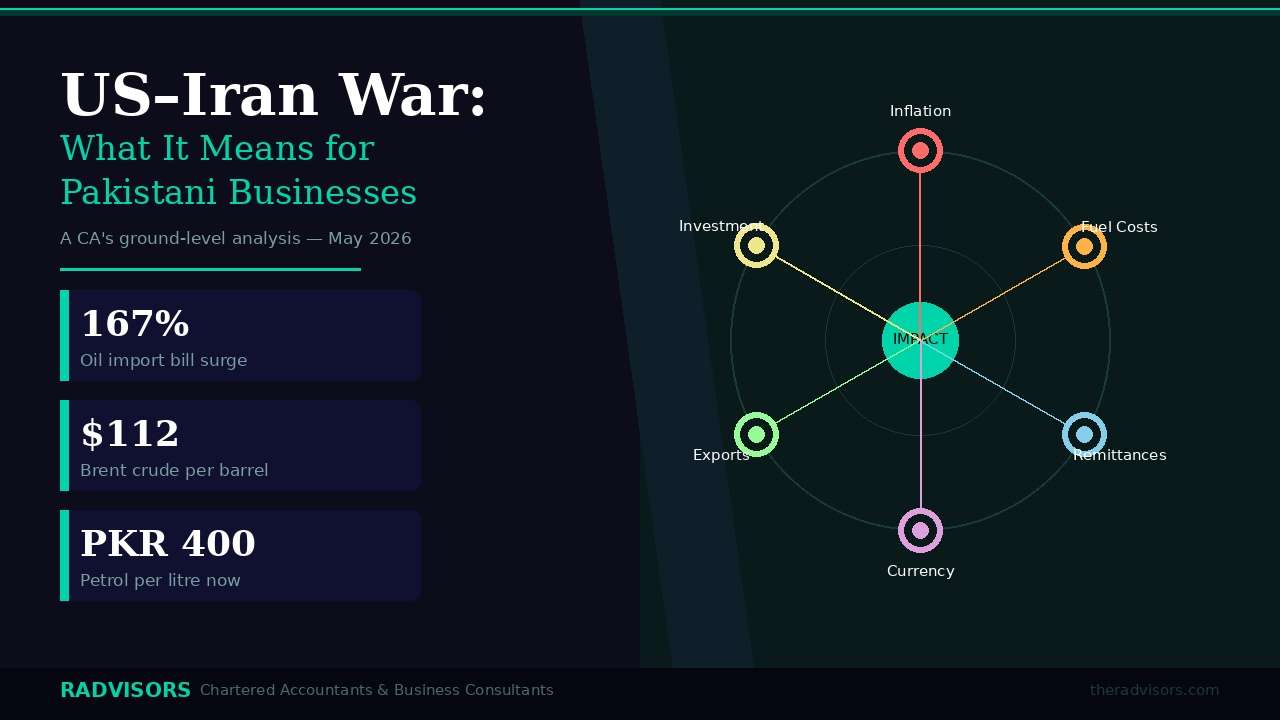
When the US and Israel struck Iran on 28 February 2026 and Iran closed the Strait of Hormuz in response, the shockwave did not stop at the Gulf. It landed directly inside every Pakistani business that imports raw materials, runs delivery vehicles, pays electricity bills, or depends on remittances from family members working in the Gulf states.
This is not abstract geopolitics. It is a PKR 400+ petrol price, electricity bill that has not stopped climbing since March and is a supplier email announcing a price revision effective immediately.
Pakistan’s Prime Minister confirmed publicly in April that the country’s weekly petroleum import bill had risen from USD 300 million to USD 800 million, a 167 percent surge. That additional annual burden approaches USD 26 billion, a figure that nearly equals Pakistan’s entire export earnings for FY2025. The country imports between 85 and 90 percent of its petroleum needs. When the Strait closes, Pakistan absorbs the full force of that dependency.
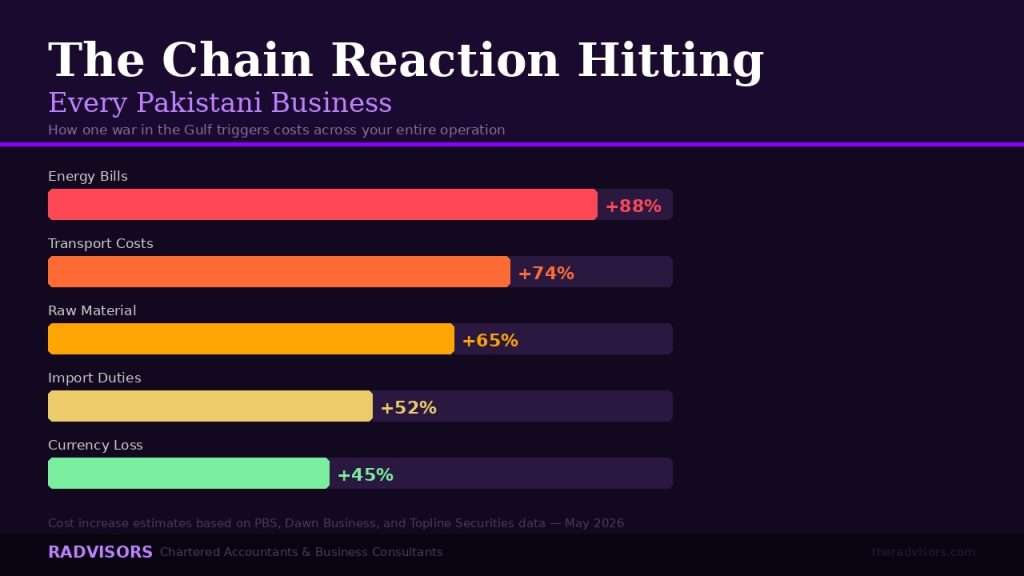
The consequences flow in every direction. Transport costs are up sharply. Industrial electricity generation costs more. Raw material prices tied to oil derivatives, packaging, synthetics, chemicals, are rising. Businesses that operate on narrow margins are being squeezed between costs they cannot control and customers who resist price increases.
What Smart Businesses Are Doing Right Now
The advisory conversations happening across Pakistan’s business community right now share a consistent theme. The businesses managing best are the ones taking deliberate, specific action rather than waiting for the situation to resolve itself.
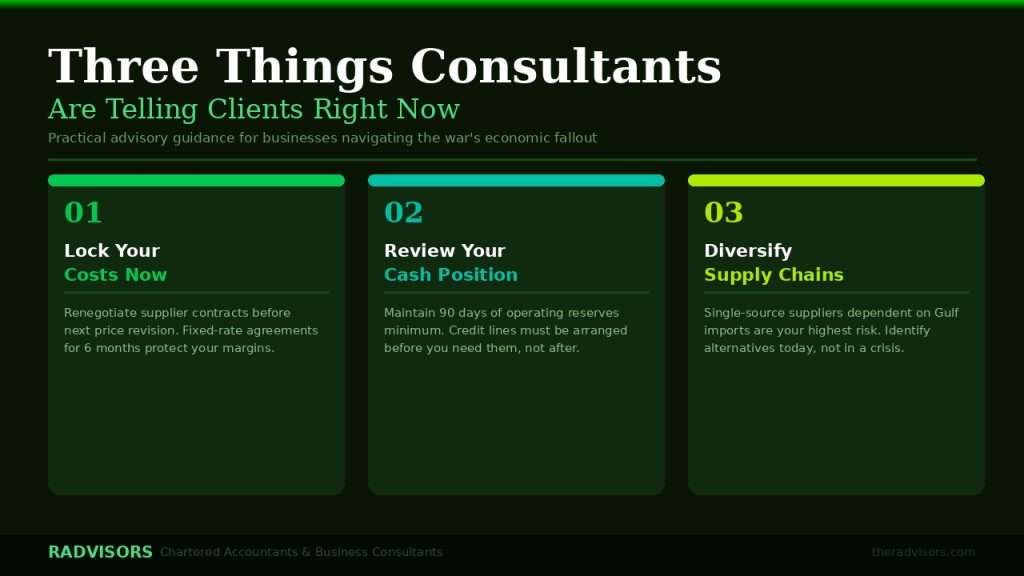
The first move is locking costs where possible. Renegotiating supplier contracts toward fixed rates for six months insulates margins against the next round of increases. The second is reviewing cash positions with genuine urgency. A 90-day operating reserve is not conservative in the current environment, it is the minimum. Credit facilities should be arranged now, while banks are still extending them, not when the business already needs them. The third is supply chain diversification. Any supplier with single-source dependency on Gulf-routed imports is a vulnerability that needs an alternative identified today.
For Investors: The Honest Picture
The KSE-100 is down significantly from its January 2026 peak. Currency pressure is real. But the businesses best positioned for recovery are those with export earnings in dollars, low fuel dependency, and strong domestic demand. Banking stocks, IT exporters, and selected agricultural businesses are considerably less exposed than energy-intensive manufacturers and importers.
Geopolitical crises end. The question for every Pakistani business owner and investor is not whether conditions improve, they will but whether their financial position survives the period between now and that improvement.
Reviewed and Written By
Prepared by a qualified Chartered Accountant with Big 4 audit and banking sector experience. Economic data sourced from Dawn Business, Pakistan PM’s public statements, Topline Securities, and Chatham House, current as of May 2026.
RAdvisors provides financial advisory and business consultancy for Pakistani SMEs and investors navigating the current economic environment. Contact us here (https://theradvisors.com) for a free initial consultation.