IMF Approves $1.32 Billion for Pakistan: What It Actually Means for Businesses and Investors
IMF Approves $1.32 Billion for Pakistan: What It Actually Means for Businesses and Investors
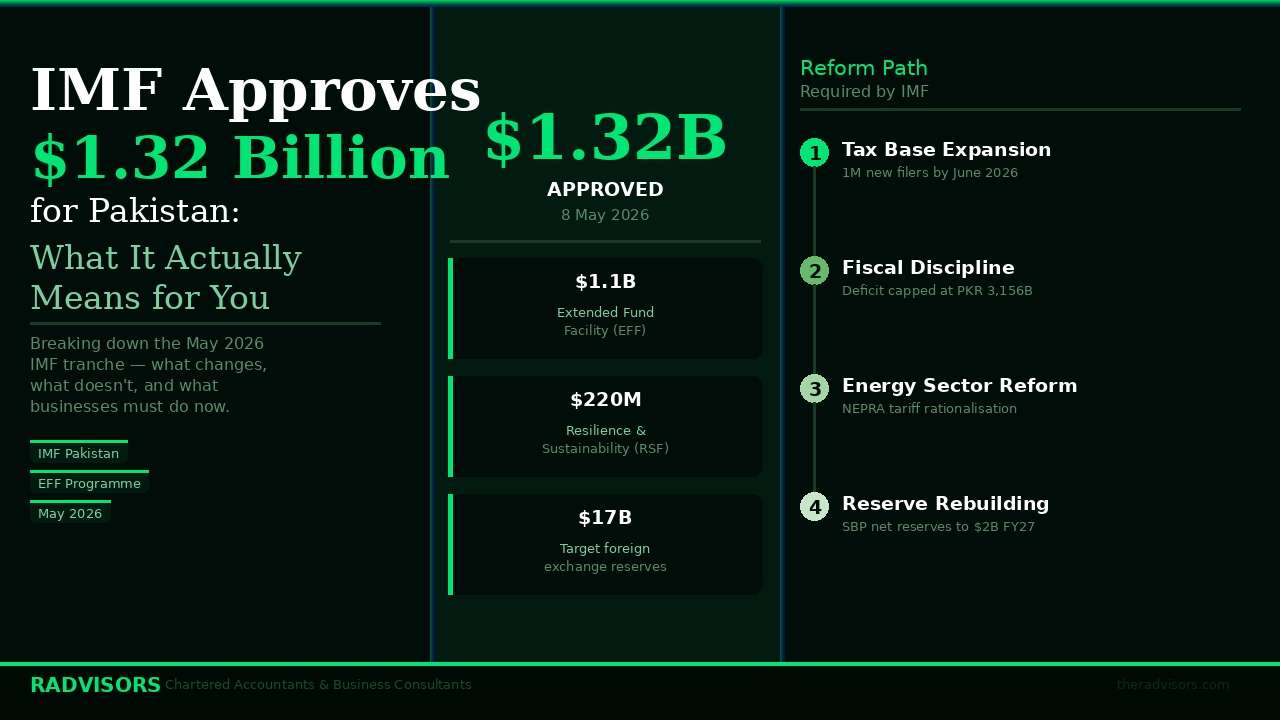
On 8 May 2026, the IMF Executive Board approved $1.32 billion for Pakistan. $1.1 billion under the Extended Fund Facility and $220 million under the Resilience and Sustainability Facility. The approval came three days ago and is already the most searched financial topic in Pakistan this week.
The government is calling it a milestone. The opposition is calling it more austerity. As usual, the truth for businesses and investors lies somewhere more practical than either headline.
What This Money Actually Does
The fresh inflow targets Pakistan’s foreign exchange reserves, which currently stand around $15.8 billion. The IMF’s own target is to push these toward $17 billion by the close of the current fiscal year. Higher reserves mean a more stable rupee. A stable rupee means lower import costs, more predictable pricing for businesses, and reduced pressure on the supply chains already strained by the Middle East conflict.
For businesses that import raw materials, components, or finished goods, rupee stability over the next quarter is the single most immediate benefit of this approval.
What It Costs Pakistan
IMF money never arrives without conditions. To secure this tranche, Pakistan committed to adding one million new tax filers by June 2026, containing the fiscal deficit at PKR 3,156 billion, continuing energy tariff rationalisation under NEPRA, and maintaining positive real interest rates, which is precisely why SBP raised the policy rate to 11.5 percent two weeks ago.
For businesses, these conditions translate into a higher tax compliance environment, elevated energy costs in the near term, and expensive credit. None of that is new but the IMF approval signals these conditions are likely to persist through FY27.
What Investors Should Take From This
IMF programme continuity is a credibility signal to international markets. Pakistan’s return to Eurobond markets earlier this year. It is first in over four years, depended on exactly this kind of programme staying on track. For domestic investors, programme continuity reduces the tail risk of a balance-of-payments crisis. The scenario that causes the sharpest and most disorderly rupee depreciations.
This does not mean the economy is out of difficulty. Oil prices remain elevated, inflation is expected to push into double digits in the coming months. So, GDP growth forecasts have been revised downward. What it does mean is that the floor under Pakistan’s economic situation is firmer today than it was last week.
The Practical Takeaway
If you run a business, review your import contracts and supplier payment terms while the rupee has a period of relative stability. If you are an investor, government securities at 11.5 percent policy rate levels remain a strong risk-adjusted return in the current environment. However, if you have been delaying financial planning decisions waiting for clarity this approval is about as much clarity as the current environment is going to provide.
Reviewed and Written By
Prepared by a qualified Chartered Accountant with Big 4 and banking sector experience. Data sourced from IMF Executive Board statement, Bloomberg, Arab News Pakistan, and Pakistan Today, current as of 11 May 2026.
RAdvisors provides financial advisory and business consultancy for Pakistani SMEs and investors. Contact us here for a free initial consultation.

Recent Posts

Best Bank Stocks in Pakistan 2026

Section 7E Struck Down by Court: What Every Property Owner in Pakistan Must Know