Pakistan Budget 2026-27: What Businesses and Taxpayers Must Expect Before June
Pakistan’s Federal Budget for fiscal year 2026-27 is weeks away. Every June, it becomes the single most searched financial topic in the country and this year, with an IMF programme in place, a Middle East crisis squeezing the economy, and a newly created Tax Policy Office drafting the Finance Bill, the stakes are higher than usual.
Here is what every business owner, salaried individual, and investor should be watching for.
The IMF Will Shape Almost Everything
This budget will not be written in Islamabad alone. The IMF’s conditions, agreed under the Extended Fund Facility, require Pakistan to maintain fiscal discipline, broaden the tax base, and avoid populist giveaways that increase the deficit. That constraint shapes every decision the Finance Minister can make.
Expect the budget to prioritise revenue collection over tax relief. The FBR has been tasked with ambitious collection targets and the newly formed Tax Policy Office, and now separated from FBR under the Finance Division, will be driving structural reform rather than temporary adjustments.
What Businesses Should Expect
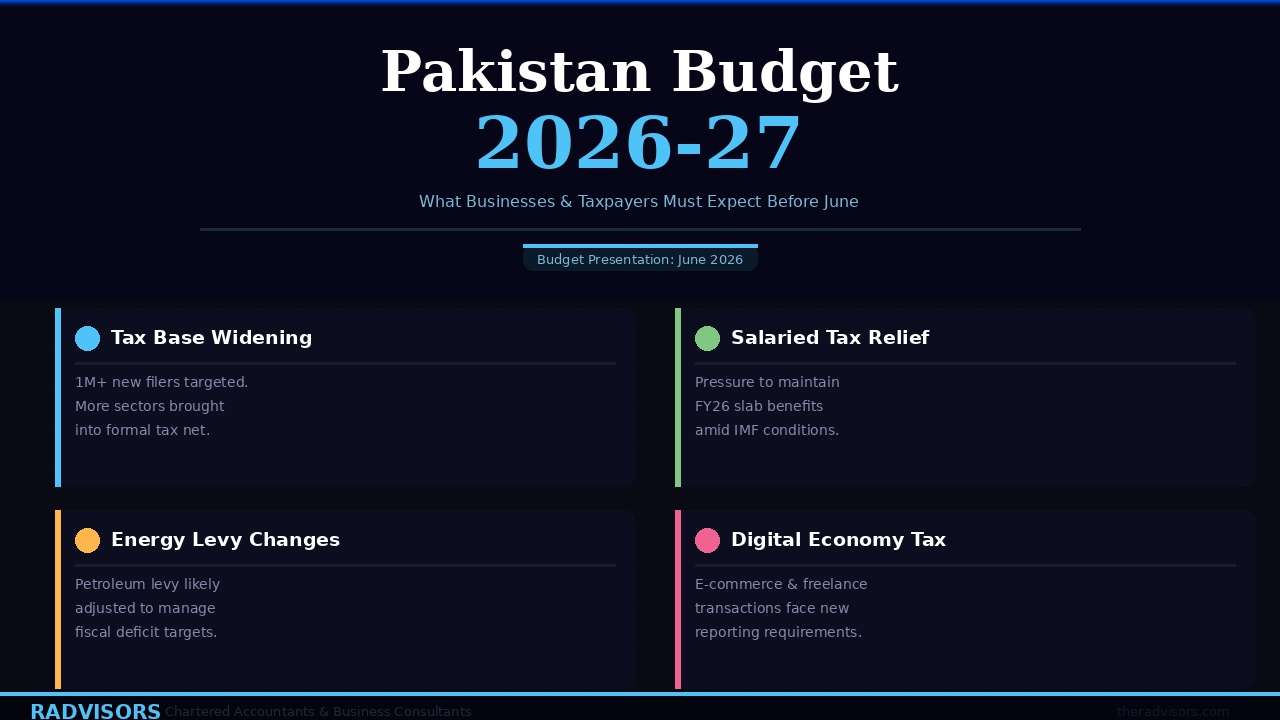
The pressure to bring more sectors into the formal tax net will intensify. Business chambers including OICCI have submitted proposals for structural tax reform, but whether those translate into actual relief depends entirely on fiscal headroom that the current environment makes very tight.
Digital economy taxation is expanding. E-commerce transactions, freelance income, and digital payment flows are all expected to face tighter reporting requirements and potentially new withholding obligations. If your business operates online and has not yet fully formalised its tax position, the window to do so voluntarily is narrowing.
Energy levy adjustments are almost certain given the petroleum import bill crisis. How these are structured will determine whether manufacturing-sector businesses face additional cost pressure or whether some relief is built in to protect industrial competitiveness.
What Salaried Individuals Should Watch
The income tax slabs introduced in Finance Act 2025-26 provided meaningful relief to lower and middle income earners. Maintaining those slabs under IMF pressure will be politically important but fiscally challenging. Super tax on high earners and additional levies on upper income brackets are more likely than new relief measures.
The one million new filer target committed to the IMF means FBR will be actively pursuing non-compliant individuals throughout FY27. If you are not yet a filer, the budget period is precisely when FBR enforcement activity peaks. Filing before the budget is announced is always the smarter position.
The Practical Move Right Now
Review your tax position before government presents Finance Bill. Budget announcements sometimes close exemptions, change rates, or introduce new obligations with immediate effect. Transactions that are tax-advantaged today may not carry the same treatment from July 2026 onwards. Decisions on property purchases, business restructuring, or investment instruments should be made with awareness of what the budget may change.
This is not alarmism. It is the practical reality of operating in a jurisdiction where the tax framework changes annually and where IMF conditions are currently driving those changes in a direction of greater formality and compliance.
Reviewed and Written By
Prepared by a qualified Chartered Accountant with Big 4 and banking sector experience. Analysis based on Ministry of Finance Budget Call Circular 2026-27, OICCI submissions, IMF programme conditions, and Business Recorder reporting, current as of 11 May 2026.
RAdvisors provides tax advisory, business consultancy, and pre-budget planning services for Pakistani businesses and individuals. Contact us here .for a free initial consultation before the budget is announced.

Recent Posts

Best Bank Stocks in Pakistan 2026

Section 7E Struck Down by Court: What Every Property Owner in Pakistan Must Know